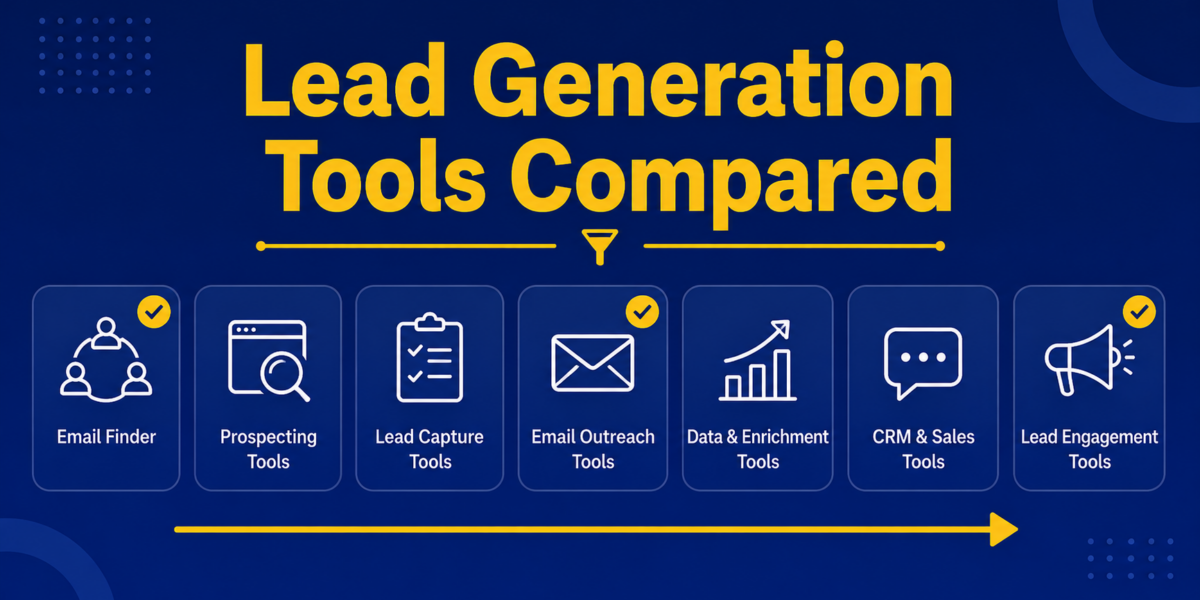
Every website has visitors who arrive, look around, and leave without ever becoming a lead. Lead generation tools exist to close that gap, capturing visitor interest through a form, a chatbot, or a well timed offer before that person disappears for good. Choosing the wrong tool, or trying to run without one, quietly wastes a huge share of the traffic a business already has. Before choosing a specific tool, it also helps to understand the fundamentals of a working marketing strategy, since a tool only performs as well as the plan behind it.
Instead of testing every option available, this guide compares 7 widely used lead generation tools, what each one does best, and where each one falls short, covering opt in popups, landing pages, forms, chatbots, and full CRM systems in one place.
OptinMonster
OptinMonster is built around opt in popups, slide ins, and floating bars designed to capture an email address without needing a full landing page. The advantage is speed, a business can launch a working lead capture campaign within a single afternoon using its drag and drop builder and behavior based triggers, such as showing an offer only when a visitor is about to leave the page, a tactic that pairs well with the broader digital marketing services a growing business typically needs. The disadvantage is that OptinMonster only handles the capture step, it does not manage what happens to a lead afterward, so it usually needs to be paired with a CRM or email tool.
Unbounce
Unbounce is a dedicated landing page builder made specifically for conversion, stripping away navigation menus and distractions so every visitor sees one offer and one action. The advantage is control, marketing teams can test different headlines, images, and layouts side by side to see exactly which version turns more visitors into leads, which fits naturally alongside strong content marketing for small business driving traffic to those pages in the first place. The disadvantage is cost relative to simpler form tools, and the learning curve for building genuinely high converting pages takes real practice.
Typeform
Typeform replaces long, intimidating forms with a conversational, one question at a time format that feels far less like paperwork. The advantage is completion rate, visitors are noticeably more likely to finish a short, friendly form than a traditional block of fields all at once. The disadvantage is that highly customized logic and advanced integrations often require the paid tiers, and very long forms can still feel slow even in this format.
Drift
Drift is a chatbot platform built to qualify visitors through live conversation rather than a static form, answering common questions and capturing contact details along the way. The advantage is engagement, a chatbot conversation often feels more natural than filling out fields, especially for visitors doing quick research before a purchase decision. The disadvantage is setup time, building conversation flows that actually sound human and answer real questions takes ongoing effort rather than a one time setup.
HubSpot
HubSpot combines lead capture, a built in CRM, email automation, and reporting inside a single connected platform. The advantage is that every lead moves seamlessly from first form submission through to a full sales record without manual data transfer, which suits a small business marketing agency managing multiple client accounts at once. The disadvantage is price, costs rise quickly once contact volume grows past the free tier, and many smaller teams end up paying for features they barely use.
Leadfeeder
Leadfeeder takes a different approach entirely, identifying the companies visiting a website even when they never fill out a form at all, using IP tracking to reveal business level visitor data. The advantage is visibility into interested prospects who would otherwise stay completely anonymous, which is especially valuable for B2B marketing teams targeting other businesses rather than individual consumers. The disadvantage is that it identifies companies, not individual contacts, so a sales team still needs to do further research before reaching out.
Zoho CRM
Zoho CRM bundles basic lead capture forms with a full customer relationship management system at a price noticeably lower than most competitors. The advantage is value, a growing business gets lead tracking, pipeline management, and reporting without the premium price tag of larger platforms, which works well alongside a focused content marketing services plan feeding new leads into that pipeline every month. The disadvantage is that the interface feels less polished than HubSpot, and some automation features require more manual configuration to get working properly.
How To Choose The Right Lead Generation Tools
The table below compares these 7 tools across the factors that matter most when narrowing down a decision, since the right choice always depends on where a business currently stands rather than which tool has the longest feature list.
| Tool | Best For | Ease Of Use | Setup Speed | Typical Price Range |
|---|---|---|---|---|
| OptinMonster | Fast email capture through popups | Easy | Very fast | Affordable |
| Unbounce | High converting dedicated landing pages | Moderate | Moderate | Mid range |
| Typeform | Friendly, high completion forms | Easy | Fast | Affordable |
| Drift | Conversational chatbot capture | Moderate | Slower | Mid range |
| HubSpot | All in one capture plus CRM | Moderate | Moderate | Premium |
| Leadfeeder | Identifying anonymous B2B visitors | Easy | Fast | Mid range |
| Zoho CRM | Budget friendly full CRM | Moderate | Moderate | Affordable |
Choosing well here matters more than most business owners realize, since a mismatched tool quietly undermines an otherwise solid approach to marketing strategies for small businesses built around getting real traffic in the first place.
Three Business Examples
A local dry cleaning business added a simple OptinMonster popup offering a small discount for first time visitors, and captured over 40 new email leads within the first month without spending anything on advertising.
An IT training institute used Typeform to replace a long enrollment inquiry form, and saw form completion rates rise noticeably once the process felt like a short conversation instead of a wall of fields.
A small ecommerce store connected Leadfeeder to identify which businesses were repeatedly visiting their wholesale pricing page, allowing the sales team to reach out directly instead of waiting for those visitors to fill out a form on their own.
Why Businesses Choose BizBoosted To Set Up Lead Generation
Buying a lead generation tool is only step one, most businesses install one and never configure the triggers, follow up sequences, or scoring that actually turn a captured lead into a paying customer. At BizBoosted, our team builds the full system around your actual customer journey, which is the same process behind how we help businesses get SEO clients using the exact tools compared in this guide.
Conclusion
There is no single best lead generation tool, only the right combination for a specific business stage, budget, and sales process. Businesses just getting started usually do well with a simple popup or form tool, while growing teams benefit from adding a full CRM once lead volume increases. Whatever combination is chosen, the tool itself is only the starting point, the real results come from how well it is set up and followed through afterward.
You may read this
1 Comment