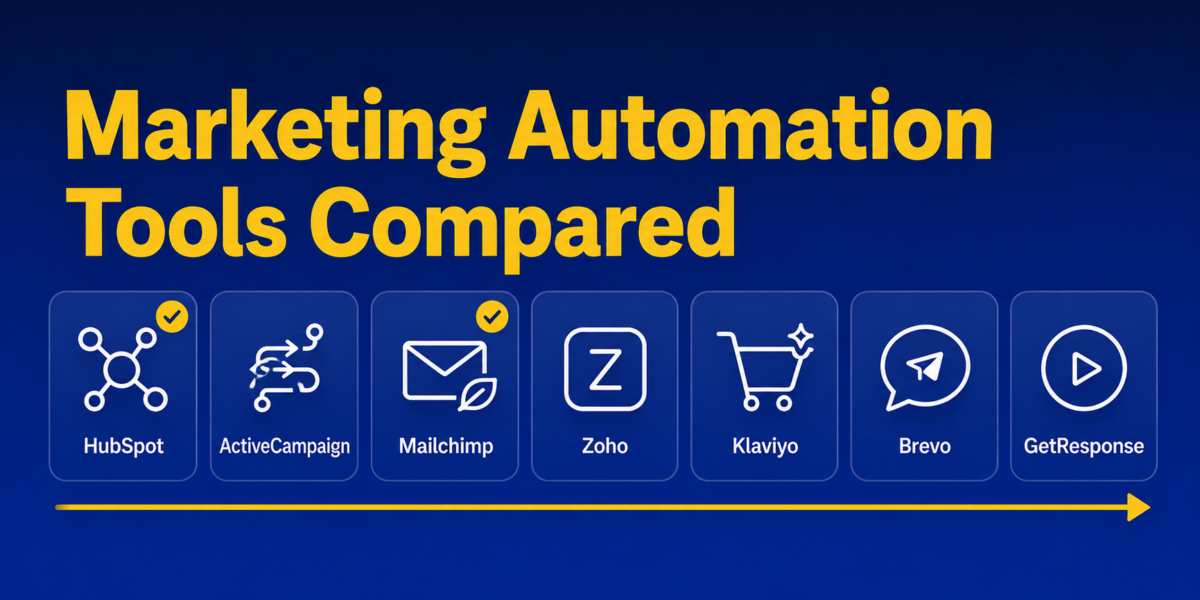
Picking the wrong marketing automation tool is an expensive mistake. You end up paying monthly for features you never use, or worse, you outgrow a cheap tool within months and have to migrate everything, workflows, contact lists, and automations, all over again. Before picking a tool, it also helps to understand the basics of how automation fits into your overall strategy, since the right tool depends entirely on what you are trying to achieve. This guide compares 7 of the most used marketing automation tools, what each one does best, and where each one falls short, so you can pick the right fit the first time.
HubSpot
HubSpot is one of the most complete marketing automation platforms available, combining email automation, a built in CRM, landing pages, and reporting in one dashboard. The advantage is that everything connects natively, so your sales team and marketing team work from the same contact data without any manual syncing, which fits naturally into a broader digital marketing service built around one connected system. The disadvantage is cost. Once your contact list grows past the free tier, pricing climbs quickly, and many small businesses find themselves paying for advanced features they rarely touch.
ActiveCampaign
ActiveCampaign is known for its automation builder, which lets you create detailed customer journeys based on behavior, such as what a visitor clicked or which page they viewed. The advantage is flexibility, the automation logic here is more advanced than most competitors at a similar price point, which makes it especially useful for B2B marketing teams running longer sales cycles with multiple touch points. The disadvantage is a learning curve. New users often need a few weeks to fully understand the automation builder before they can use it confidently.
Mailchimp
Mailchimp started as a simple email tool and has grown into a broader marketing automation platform. The advantage is ease of use, the interface is beginner friendly and requires almost no training. The disadvantage is that its automation features are noticeably less advanced than ActiveCampaign or HubSpot, which makes it a better starting point for a small business marketing agency setup or a solo founder rather than a team running complex multi step campaigns.
Zoho CRM Plus
Zoho CRM Plus bundles marketing automation with sales, support, and analytics tools under one Zoho account. The advantage is value, it typically costs less than comparable all in one platforms while still covering most core automation needs. The disadvantage is that the interface feels less polished than HubSpot or ActiveCampaign, and some automation features require extra configuration that competitors handle automatically.
Klaviyo
Klaviyo was built specifically for ecommerce stores, with deep integrations for platforms like Shopify and WooCommerce. The advantage is precision, automations can trigger based on actual purchase behavior, abandoned carts, or browsing history, which drives strong return on investment when paired with proper ecommerce SEO work driving traffic to the store in the first place. The disadvantage is that Klaviyo offers far less value outside ecommerce, service based businesses typically find better options elsewhere.
Brevo
Brevo, formerly known as Sendinblue, combines email, SMS, and chat automation in one platform at a genuinely affordable price. The advantage is that SMS automation is built in, which many competitors charge extra for or do not offer at all. The disadvantage is that its reporting and analytics are more basic compared to HubSpot or ActiveCampaign, which can matter for businesses that rely heavily on detailed performance data.
GetResponse
GetResponse includes automation, landing pages, and webinar hosting in a single subscription, which is unusual among marketing automation tools. The advantage is that businesses running webinars or online courses get a genuinely useful bundle without needing separate software. The disadvantage is that its automation builder is less intuitive than ActiveCampaign, and some users report a steeper setup process for advanced workflows.
How To Choose The Right Marketing Automation Tool
The table below compares these 7 tools side by side across the factors that matter most when making a decision. Choosing well here matters more than most business owners realize, since the wrong pick often quietly undermines an otherwise solid marketing strategy for small businesses.
| Tool | Best For | Ease Of Use | Automation Depth | Typical Price Range |
|---|---|---|---|---|
| HubSpot | All in one teams needing CRM and marketing together | Moderate | Very high | Premium |
| ActiveCampaign | Businesses wanting advanced behavior based automation | Moderate | Very high | Mid range |
| Mailchimp | Beginners just starting with automation | Easy | Basic to moderate | Affordable |
| Zoho CRM Plus | Budget conscious teams wanting an all in one suite | Moderate | Moderate | Affordable |
| Klaviyo | Ecommerce stores | Moderate | High for ecommerce | Mid range |
| Brevo | Businesses wanting email and SMS together | Easy | Moderate | Affordable |
| GetResponse | Businesses running webinars or courses | Moderate | Moderate | Mid range |
Three Business Examples
A local dry cleaning business set up a simple automated email sequence using an affordable tool to remind customers about seasonal services, and saw a noticeable increase in repeat bookings within a few months, without adding any extra staff time, as part of a wider content marketing plan for small business.
A small ecommerce store switched from a general email tool to Klaviyo and connected it directly to their store platform, allowing abandoned cart emails to trigger automatically, which recovered a meaningful share of otherwise lost sales within the first quarter of use.
An IT training institute used ActiveCampaign to build a lead nurture sequence for prospective students, automatically sending course information based on which page a visitor viewed, which shortened their average time from inquiry to enrollment. This kind of behavior based automation works especially well once you understand your audience search intent and match content to what stage of the decision they are actually in.
Why Businesses Choose BizBoosted To Set Up Marketing Automation
Buying the right tool is only half the job. Most businesses buy a marketing automation platform and never use more than a fraction of what it can actually do, because setting up the automations, sequences, and triggers correctly takes real strategy work, the same way our SEO automation process combines the right tools with the right strategy behind them. At BizBoosted, our team sets up your chosen platform around your actual customer journey instead of leaving you with a blank dashboard and a login.
Conclusion
There is no single best marketing automation tool, only the right tool for your business type, budget, and goals. Ecommerce stores tend to get the most value from Klaviyo, all in one teams often prefer HubSpot or Zoho, and businesses just starting out usually do better beginning with Mailchimp or Brevo. Whatever you choose, the tool itself is only step one, the real results come from how well it is set up and connected to your customer journey.
1 Comment