Building Links: What Does It Mean?
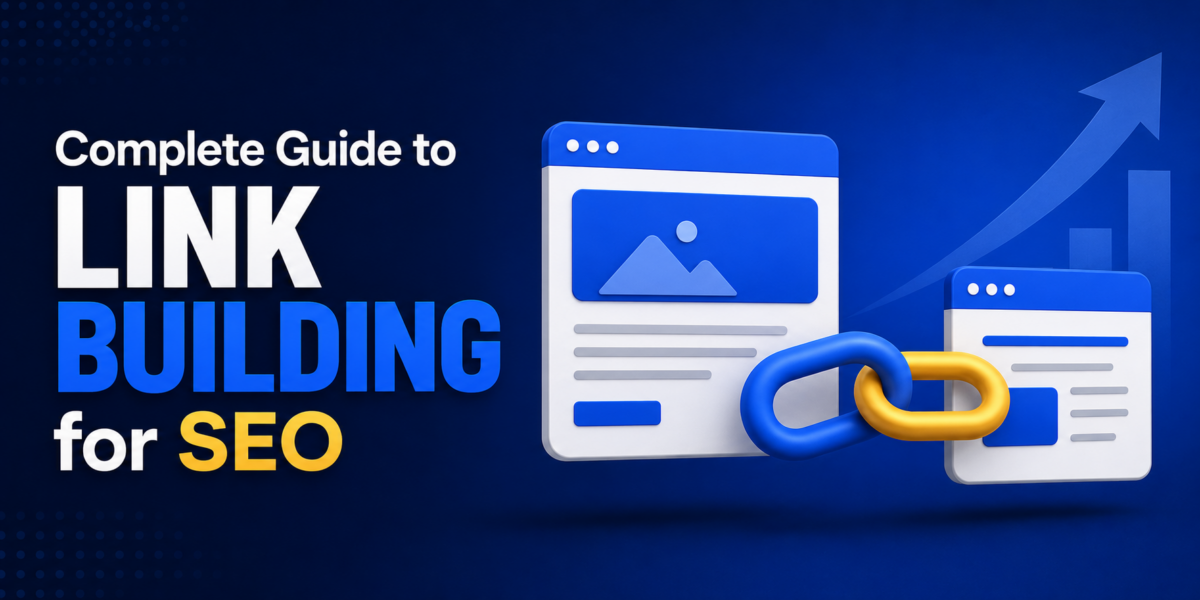
Building links is the process of getting other websites to link to pages on your website. These links, commonly called backlinks, can help search engines discover your content, understand relationships between websites, and evaluate the authority and relevance of your pages. For businesses trying to improve organic visibility, link building can become an important part of a broader SEO strategy because strong backlinks can support rankings, referral traffic, brand visibility, and online credibility.
However, modern link building is not about collecting as many links as possible. A website with hundreds of irrelevant, low-quality, or manipulative backlinks may not gain the benefits that a smaller number of relevant and trustworthy links can provide. The real objective is to earn links that make sense because another website genuinely finds your content useful. When a relevant website references your guide, research, tool, service, or original resource, that link can send both users and valuable contextual signals toward your website.
If you are new to SEO, start with this Beginner Guide to SEO to understand how link building fits into the wider search optimization process.
Why Is Building Links Important for SEO?
Search engines use many signals to determine which pages deserve visibility in search results. Links are one part of that broader system. When reputable websites link to your content, those links can act as references that help search engines understand that your website is being mentioned within a wider online ecosystem.
Links can also generate direct referral traffic. Imagine you publish an in-depth guide about Google Ads and a respected marketing website references it as a useful resource. Visitors reading that article may click the link and arrive on your website. Some of those visitors may read additional articles, explore your tools, contact your business, or eventually become customers.
This means a successful link building strategy should have two goals: improve your website’s authority and attract relevant people. A backlink that generates qualified referral traffic can be valuable even beyond its potential SEO impact.
What Is a Backlink?
A backlink is a link from another website pointing toward your website. For example, if Website A publishes an article and includes a link to your SEO guide, your website has received a backlink from Website A.
Backlinks can come from:
- Blog articles
- News websites
- Industry publications
- Business directories
- Resource pages
- Guest posts
- Case studies
- Interviews
- Digital publications
- Educational resources
- Partner websites
Not every backlink has equal value. A relevant link from a respected website in your industry can be considerably more useful than dozens of unrelated links from low-quality websites.
This is why building links should focus on quality, relevance, context, and sustainability rather than simply chasing a large backlink count
What Makes a High-Quality Link?
A high-quality backlink generally comes from a website that is relevant, trustworthy, and capable of sending genuine users to your content. Relevance is particularly important because a link makes more sense when the referring website discusses a topic related to the page being linked.
For example, a marketing website linking to your SEO strategy guide is naturally relevant. A completely unrelated website linking to that same page may provide much less contextual value. Similarly, a genuine editorial mention within a useful article can be more meaningful than a link placed on a page that exists primarily to sell or distribute backlinks.
When evaluating a potential link, consider:
Relevance: Is the website related to your industry or topic?
Authority: Does the website have an established reputation?
Editorial context: Is the link naturally included within useful content?
Traffic: Does the website have real visitors?
Trust: Does the website appear legitimate and maintained?
Placement: Is the link visible and useful to readers?
These factors are more important than simply looking at one third-party metric.
Do-Follow vs No-Follow Links
You may hear SEO professionals discuss do-follow and no-follow links. In simple terms, links can include attributes that influence how search engines treat the relationship between the linking website and the destination.
A standard link can potentially pass ranking-related signals, while links using attributes such as nofollow, sponsored, or ugc communicate additional information about the nature of the link.
This does not mean no-follow links are useless. They can still generate referral traffic, brand exposure, discovery, and potential customers. A natural backlink profile can contain different types of links.
The goal should therefore not be to manipulate your backlink profile toward one particular link attribute. Focus on earning genuine mentions from websites where your content is useful to their audience.
Best Building Links Strategies
1. Create Link-Worthy Content
The foundation of effective link building is content worth linking to. If your website contains generic articles that provide nothing new, convincing other websites to reference them can be difficult.
Create resources that solve real problems or provide information people want to reference. These can include detailed guides, original research, statistics, calculators, templates, checklists, case studies, comparisons, industry reports, and useful tools.
For example, if you publish a detailed Google Ads Cost Calculator, marketers may naturally reference it when explaining advertising budgets. A genuinely useful resource gives publishers a reason to link to you.
This is where content strategy and link building work together. Your Content Strategy Guide can help you plan content that supports both search visibility and long-term authority.
2. Guest Posting
Guest posting involves creating an article for another website and receiving an appropriate link back to your website. When done correctly, guest posting can help you reach a new audience, demonstrate expertise, build relationships with publishers, and generate relevant referral traffic.
The key is quality. Do not submit the same low-quality article to hundreds of websites. Instead, identify publications that are genuinely relevant to your industry and create content specifically for their audience.
For example, an SEO website might contribute an article about technical SEO, content strategy, local search, or Google Ads to a marketing publication. The article can naturally reference a relevant resource on the author’s website where appropriate.
Guest posting should be treated as content collaboration, not simply as a way to insert backlinks.
3. Build Resource Page Links
Resource pages collect useful websites, guides, tools, or references around a particular topic. If you have created an exceptional resource that genuinely improves the page, you can contact the website owner and suggest it.
For example, suppose you created a comprehensive guide to SEO tools. A website that maintains a list of useful SEO resources might consider adding your guide.
The outreach message should explain why your resource would help their readers. Avoid sending generic messages such as “Please add my link.” Instead, demonstrate that you have actually reviewed their page and explain the specific value your resource provides.
4. Broken Link Building
Broken link building involves identifying links on other websites that no longer work and suggesting a relevant replacement resource.
For example, a marketing website may have an article containing a link to an old SEO resource that has disappeared. If you have created a current and genuinely useful replacement, you can contact the publisher and explain the broken link while suggesting your resource.
This strategy works because you are not simply asking for a favor. You are helping the website owner improve the quality of an existing page.
However, the replacement must genuinely match the original resource. Recommending an unrelated page simply to obtain a backlink can reduce the effectiveness of your outreach.
5. Digital PR and Brand Mentions
Digital PR can be a powerful method of earning backlinks because it focuses on getting your business, research, expertise, or unique data in front of journalists and publishers.
You can create original research, publish industry statistics, provide expert commentary, release useful reports, or create something newsworthy that publications want to discuss.
For example, an SEO agency could analyze thousands of search results and publish original findings about search trends. Other websites may then reference that research when writing their own articles.
This approach can generate multiple natural backlinks while also increasing brand recognition.
6. Create Free Tools
Free tools can be excellent link magnets because people naturally reference useful resources.
For example, a website could offer:
- Word counters
- Meta title generators
- Meta description generators
- Keyword tools
- ROI calculators
- Marketing calculators
- Business name generators
A useful tool can attract links from bloggers, educators, marketers, and businesses that want to recommend it to their audiences.
Your Word Counter is an example of the type of resource that can support this strategy. Similarly, useful SEO resources such as a Meta Title Generator can become destinations that other websites may naturally reference.
7. Promote Original Research
Original research is one of the strongest forms of linkable content because other writers need credible information to support their own claims.
Instead of repeating information already available everywhere, collect your own data and present meaningful findings. This could include survey results, industry statistics, case studies, experiments, or analysis of publicly available data.
For example, an agency could analyze 1,000 small business websites and report common technical SEO problems. Other publications discussing website optimization may reference the study.
Original research gives publishers something they cannot simply copy from another article.
8. Use Internal Linking
Not every link needs to come from another website. Internal links connect pages within your own website and help users and search engines discover related content.
For example, this article about building links can naturally connect to your Internal Linking Guide, which explains how to build stronger connections between your own pages.
Internal linking can also distribute users and contextual relevance across your content cluster. A strong structure can look like:
SEO Guide → Keyword Research → Content Strategy → Link Building → Technical SEO → SEO Services
This makes your website easier to navigate and creates clear relationships between related topics.
How to Build Links Without Spamming
A sustainable approach starts with relevance. Before contacting a website, ask whether its audience would genuinely benefit from your content. If the answer is no, the link probably is not worth pursuing.
Avoid sending hundreds of identical emails. Personalized outreach is usually more effective because it demonstrates that you understand the publication and its audience.
Your outreach should be short and useful. Explain who you are, identify the relevant page or content opportunity, and clearly explain why your resource could improve their article.
Most importantly, do not manufacture fake relationships, create networks of low-quality websites, or use automated systems to place links everywhere. Short-term link volume is not a substitute for long-term authority.
Anchor Text in Link Building
Anchor text is the clickable text used in a hyperlink. For example, in the phrase “SEO strategy guide,” that phrase is the anchor text.
Anchor text helps users understand what they will find after clicking the link. It can also provide contextual information about the destination page.
However, repeatedly forcing the exact same keyword into every backlink can create an unnatural pattern. Your backlink profile should develop naturally and include different types of anchor text.
Common examples include:
- Brand name
- Website name
- Exact keyword
- Partial keyword
- Descriptive phrase
- Naked URL
- Generic phrases such as “learn more”
The safest approach is to prioritize natural language and user experience rather than aggressively controlling every external anchor.
How Many Backlinks Do You Need?
There is no universal number of backlinks required to rank a page. Competition, content quality, search intent, website authority, topical relevance, technical SEO, and many other factors influence ranking.
A page competing against strong established websites may require considerably more authority than a page targeting an underserved topic.
Instead of asking “How many backlinks do I need?”, ask:
“What level of authority and relevance do the pages ranking for my target topic have, and what can I create that is better?”
Study the competing pages, identify gaps, create stronger content, and build relationships with relevant websites.
Common Link Building Mistakes
One of the biggest mistakes is focusing entirely on quantity. Thousands of irrelevant links do not automatically create a strong SEO profile. Another common mistake is buying links purely to manipulate rankings without considering quality, relevance, or search engine guidelines.
Other mistakes include using the same anchor text excessively, publishing low-quality guest posts, contacting irrelevant websites, using automated link-building software, and ignoring the quality of the content being promoted.
| Mistake | Better Approach |
|---|---|
| Chasing thousands of links | Earn relevant links |
| Buying low-quality backlinks | Build genuine relationships |
| Spammy guest posting | Publish useful expert content |
| Exact-match anchor everywhere | Use natural anchor variations |
| Automated outreach | Personalize campaigns |
| Ignoring content quality | Create link-worthy resources |
| Focusing only on metrics | Evaluate relevance and real value |
How to Measure Link Building Success
Do not measure your campaign only by the number of backlinks acquired. Look at whether the links are helping your website achieve meaningful objectives.
Track:
- New referring domains
- Relevant backlinks
- Referral traffic
- Organic visibility
- Keyword rankings
- Brand mentions
- Leads
- Conversions
- Growth of important pages
A backlink that sends 500 relevant visitors to your website can be more valuable than 50 links that send no traffic.
You should also regularly review your backlink profile and identify suspicious, irrelevant, or potentially harmful patterns. Your SEO Services Guide provides broader context on how link building fits into a complete SEO campaign.
Building Links for Small Businesses
Small businesses do not necessarily need enormous link-building budgets. They can start by building relationships within their local community and industry.
Potential opportunities include local organizations, suppliers, partners, chambers of commerce, industry associations, local publications, community websites, relevant directories, and complementary businesses.
A local restaurant, for example, might earn links from a local food publication, tourism website, community organization, event organizer, or supplier. These links can be especially useful because they combine geographic and topical relevance.
Small businesses can also combine link building with Local SEO Consultant strategies to strengthen their overall local search presence.
Link Building vs SEO
Link building is only one component of SEO. A website can have excellent backlinks but still struggle because of poor technical performance, weak content, bad search intent targeting, or a poor user experience.
Your SEO strategy should therefore include:
Technical SEO + Content + Keyword Research + On-Page SEO + Internal Linking + Link Building + User Experience
For example, your Technical SEO strategy can ensure search engines can properly crawl and understand your website, while strong content gives other websites something valuable to reference.
This integrated approach is much stronger than treating link building as a standalone activity.
How to Build a Sustainable Link Building Strategy
Start by identifying your most important pages. These might include your core service pages, detailed guides, original research, tools, and high-value resources.
Next, identify websites that already publish content around those topics. Build a prospect list based on relevance and quality rather than simply collecting thousands of domains.
Then create a personalized outreach process. Track the websites you contacted, the content opportunity, contact information, date contacted, response, and outcome.
Finally, continue creating link-worthy resources. Link building should not be a one-time campaign. As your website publishes stronger resources and develops relationships with publishers, earning links can become progressively easier.
Conclusion
Building links is most effective when it focuses on earning genuine references rather than simply increasing backlink numbers. Create valuable content, publish original research, develop useful tools, contribute expert resources, build relationships with relevant websites, and use personalized outreach to earn meaningful mentions. Combine external links with strong internal linking, technical SEO, search-focused content, and a clear website structure to create a stronger overall SEO foundation. Most importantly, think about the people behind every link: if the resource is genuinely useful to their audience, the link has a much better chance of providing lasting SEO and business value.
You May read this
FAQs
What is building links in SEO?
Building links is the process of acquiring links from other websites to your website to support visibility, referral traffic, authority, and discoverability.
Why is link building important?
It can help search engines discover relationships between websites and can increase referral traffic, authority, and organic search potential when links are relevant and earned naturally.
What is a good backlink?
A good backlink is generally relevant, trustworthy, naturally placed, and useful to the audience of the referring website.
How can I build backlinks for free?
You can create link-worthy resources, contribute useful guest content, conduct outreach, build relationships, create free tools, publish original research, and promote valuable resources.
How long does link building take?
Results vary depending on competition, website authority, content quality, outreach quality, and the type of links being earned. It is generally a long-term SEO activity rather than an overnight strategy.
Are more backlinks always better?
No. Quality, relevance, trust, and context matter. A smaller number of strong, relevant links can be more valuable than a large number of poor-quality links.