What Is Google Ads Conversion Tracking?
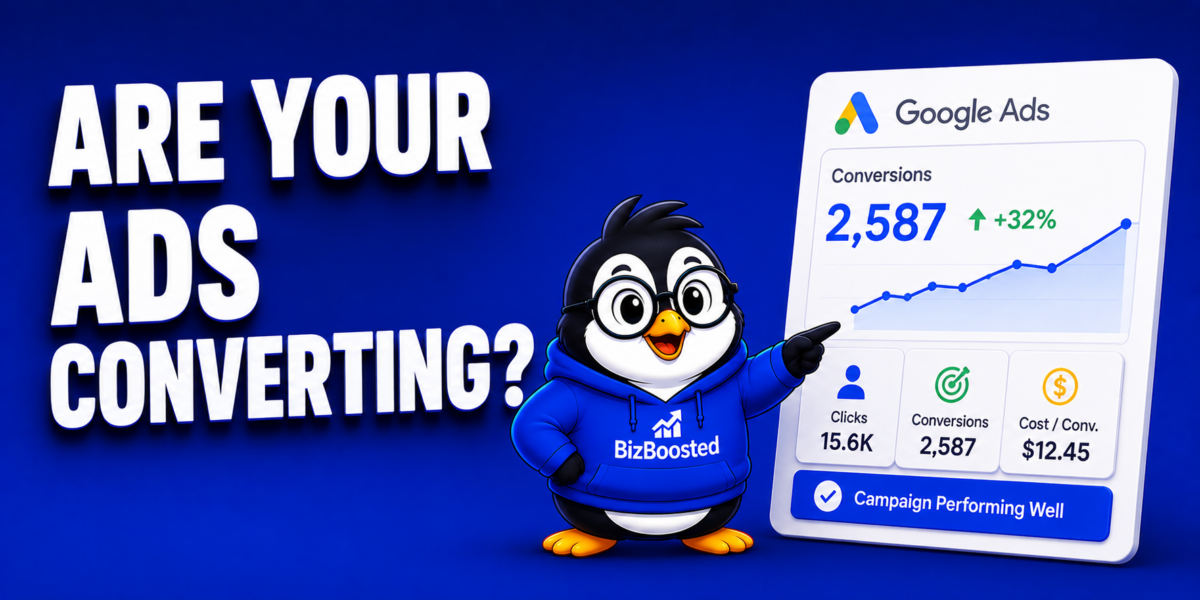
Getting clicks from Google Ads is only the beginning. The real question is what happens after someone clicks your advertisement. Do they purchase, submit a form, call your business, book an appointment, or simply leave the website? Google Ads Conversion Tracking helps answer these questions by measuring actions that matter to your business after people interact with your ads.
Without accurate tracking, you may see hundreds of clicks and assume your campaign is successful, while those visitors generate very few valuable actions. On the other hand, a campaign with fewer clicks may actually be producing more qualified leads and sales. Conversion data gives you the information needed to understand which campaigns, ads, keywords, and other elements are contributing to meaningful results.
This makes conversion tracking one of the most important parts of paid advertising. It connects your advertising spend with actual business outcomes. Instead of asking only how much traffic your campaign generated, you can start asking more valuable questions: Which campaign generates customers? Which keyword produces qualified leads? Which advertisement creates sales? And how much does each conversion actually cost?
How Google Ads Conversion Tracking Works
The basic process is straightforward. You first define an action that represents value to your business, such as a purchase, lead form submission, phone call, booking, or signup. You then configure Google Ads to record when that action happens. Once data starts coming in, you can analyze which advertising interactions are contributing to those conversions.
For example, imagine a digital marketing agency receives 200 visitors from Google Ads. Ten visitors submit a contact form, four call the business, and two eventually become clients. Looking only at clicks would hide the most important information. Conversion tracking allows the business to distinguish simple website traffic from actions that can contribute to revenue.
The process can be summarized as:
Ad Impression → Click → Website Visit → User Action → Conversion → Data → Optimization
This data can then influence how you evaluate and improve your campaigns. If a particular campaign consistently generates valuable conversions at an acceptable cost, it may deserve additional attention or budget. If another campaign generates traffic without meaningful actions, you have a reason to investigate it.
Why Conversion Tracking Is Important
One of the biggest advantages of Google Ads Conversion Tracking is that it changes the way you measure advertising performance. Instead of focusing only on impressions and clicks, you can evaluate actions that have a direct relationship with your business objectives.
Suppose Campaign A receives 1,000 clicks and produces 20 leads, while Campaign B receives only 500 clicks and produces 30 leads. Campaign B generated half the traffic but more conversions. If you only judged performance using clicks, you might incorrectly assume Campaign A was better.
Conversion tracking also helps identify where your budget is working hardest. When conversion data is reliable, you can compare campaigns, ad groups, keywords, audiences, devices, locations, and other dimensions to understand where valuable actions are coming from.
For a broader understanding of measurable advertising, you can also explore What Is Performance Marketing?, which explains why businesses should focus on measurable outcomes rather than vanity metrics.
What Should You Track as a Conversion?
The right conversion depends on your business model. There is no universal list that works for every company. An ecommerce store may primarily care about purchases, while a local service business may care more about phone calls and quote requests.
Common conversion actions include:
- Online purchases
- Lead form submissions
- Phone calls
- Appointment bookings
- Quote requests
- Account registrations
- Newsletter signups
- Demo requests
- Downloads
- Valuable website interactions
The important thing is to distinguish between primary business conversions and actions that are useful but not necessarily equal to a sale. For example, a purchase should generally have greater business value for an ecommerce store than a simple page view.
Tracking too many low-value actions as conversions can make your campaign data confusing. If Google Ads treats every minor interaction as equally important, you may end up optimizing toward activity rather than genuine business value.
Types of Google Ads Conversions
Google Ads can measure different types of conversion actions depending on how your business interacts with customers. Website conversions are common for businesses that want to measure purchases, forms, registrations, or other online actions.
Phone call conversions can be especially important for local businesses and service providers. Someone searching for an emergency plumber, dentist, lawyer, or home repair service may prefer calling instead of completing an online form.
App businesses can track actions within their applications, while offline conversion measurement can help businesses connect online advertising interactions with actions that happen later, such as qualified sales or closed deals.
The right setup depends on the complete customer journey. A business should not choose conversion actions simply because they are easy to track. It should choose actions that provide meaningful information about whether advertising is contributing to growth.
Google Ads Conversion Tracking for Lead Generation
Lead-generation campaigns require special attention because a form submission does not automatically equal a customer. Someone can submit a form with incorrect information, ask an irrelevant question, or never respond to the sales team.
For this reason, businesses should ideally look beyond the initial lead. A useful funnel might look like:
Ad Click → Lead → Qualified Lead → Sales Conversation → Customer
Suppose a campaign generates 100 leads but only 10 are qualified. Another campaign generates 50 leads but 20 are qualified. The second campaign may be significantly more valuable even though its total lead count is lower.
This is where accurate conversion definitions become critical. If possible, businesses should connect advertising data with meaningful downstream outcomes rather than optimizing exclusively for the first form submission.
Google Ads Conversion Tracking for Ecommerce
For ecommerce businesses, purchase tracking is particularly valuable because the business can often measure both the number and value of transactions. Instead of treating every purchase as identical, conversion value can help businesses understand the revenue generated by different campaigns.
For example, one campaign may generate 50 orders worth $2,000, while another generates 20 orders worth $5,000. Looking only at order volume would make the first campaign appear stronger. Looking at revenue tells a different story.
This information can help advertisers evaluate whether their campaigns are producing profitable sales rather than simply generating transactions. Businesses should also consider margins, returns, shipping costs, and other financial factors when evaluating advertising performance.
Conversion Value and ROI
Conversion tracking becomes even more useful when you assign appropriate values to meaningful actions. A purchase may have a specific monetary value, while a lead may have an estimated value based on the percentage of leads that typically become customers.
For example, if a business knows that approximately one in ten qualified leads becomes a customer worth $1,000 in revenue, it can use that information as part of a broader measurement strategy. The exact value depends on the business’s actual economics.
This allows advertisers to move beyond:
“How many conversions did I get?”
toward:
“How much business value did these conversions generate?”
That shift can make campaign optimization much more strategic.
Google Ads Conversion Tracking and Bidding
Conversion data can also support automated bidding strategies designed around conversion-related goals. However, automation is only as useful as the data being provided to it.
Imagine a campaign is optimized toward form submissions, but the tracking system records duplicate submissions or includes low-quality enquiries. The system may learn that these actions are valuable even though the business does not consider them valuable.
This is why accurate tracking should come before aggressive optimization. Make sure your conversion actions represent genuine business value before relying heavily on conversion-focused automation.
If you are still planning your campaign structure, your Google Ads Cost Explained guide can help you understand how conversion costs connect with your overall advertising budget.
How to Set Up Google Ads Conversion Tracking
The exact implementation depends on the conversion you want to measure and your website setup, but the overall process follows a similar structure.
1. Define Your Conversion
Start by deciding what action matters. For an ecommerce business, this could be a purchase. For a service business, it might be a qualified enquiry or phone call.
2. Create the Conversion Action
Configure the appropriate conversion action in Google Ads and define the relevant settings, such as category, value, counting method, and other available options.
3. Connect the Tracking Method
Depending on your website and setup, you may use Google Tag Manager, Google Analytics, website tagging, or another supported implementation method.
4. Test the Tracking
Never assume tracking works simply because the configuration has been published. Test the conversion action and verify that the expected event is being recorded correctly.
5. Monitor the Data
Once conversions begin appearing, compare campaigns and traffic sources. Look for patterns rather than reacting to one day’s results.
6. Optimize Based on Business Value
Use conversion information to improve targeting, advertisements, landing pages, bidding, and budget allocation.
Google Ads Conversion Tracking and Google Analytics
Google Ads and Google Analytics can work together to provide a broader understanding of customer behavior. Google Ads focuses heavily on advertising interactions and campaign performance, while Analytics can provide additional information about what users do on your website or app.
For example, a visitor may click a Google advertisement, browse several pages, return later, and eventually complete a purchase. Understanding this customer journey can help you avoid judging advertising performance based only on the first interaction.
However, the tracking systems and attribution models can differ, so businesses should understand what each platform is measuring rather than assuming that every report will display identical numbers.
Common Conversion Tracking Mistakes
One of the most damaging mistakes is tracking conversions that do not actually represent business value. A page view, time on site, or button click may be useful as an engagement signal, but it should not automatically be treated as a primary business conversion.
Duplicate tracking is another problem. If the same purchase or form submission is recorded multiple times, your reports may show inflated conversion numbers. This can make campaigns appear more successful than they really are and potentially affect automated bidding.
Failing to test tracking after website changes can create another issue. A new website design, checkout system, form plugin, or tracking configuration can accidentally break conversion measurement.
| Common Mistake | Better Approach |
|---|---|
| Tracking every interaction | Prioritize valuable actions |
| Duplicate conversions | Test implementation |
| Ignoring offline outcomes | Connect valuable customer actions |
| Never testing tracking | Verify conversions regularly |
| Optimizing for cheap leads | Measure lead quality |
| Trusting one metric | Review the full funnel |
Why Conversion Tracking Data Can Be Different
It is normal for different platforms or reports to show different numbers because they may use different attribution methods, reporting windows, definitions, and processing rules. The important thing is to understand what each measurement represents.
For example, the number of conversions attributed to Google Ads may not exactly match the number of purchases visible in another analytics or ecommerce system. Rather than assuming one system is automatically wrong, investigate the tracking configuration and understand the attribution methodology being used.
Consistency is particularly important when making long-term comparisons. If you frequently change conversion definitions, attribution settings, or tracking methods, historical comparisons can become more difficult.
How to Improve Conversion Tracking Accuracy
Start by keeping your conversion structure simple and meaningful. Identify the actions that directly support your business objectives and separate them from secondary engagement signals.
Next, verify your implementation. Test forms, purchases, calls, and other conversion actions using realistic user journeys. If your website has multiple forms or checkout paths, test the important ones rather than assuming one successful test proves everything works.
You should also review conversion data regularly. If conversion numbers suddenly increase or decrease without an obvious business reason, investigate the tracking before making major campaign decisions.
Accurate measurement is especially important when your campaigns are becoming larger. A small tracking error can become a major reporting problem when advertising spend increases.
How Conversion Tracking Helps Reduce Wasted Ad Spend
Without conversion data, advertisers may continue investing in campaigns that generate traffic but little business value. With reliable tracking, you can identify which campaigns and search themes are contributing to meaningful actions.
For example, suppose three campaigns each spend $500. Campaign A generates 50 conversions, Campaign B generates 20, and Campaign C generates 5. That information immediately gives you a reason to investigate differences in targeting, search intent, landing pages, and lead quality.
But do not automatically move all budget into Campaign A. First determine whether those 50 conversions are genuinely valuable. A smaller number of high-quality conversions can outperform a large number of low-quality actions.
For businesses combining paid search with organic growth, SEO Strategy Guide can help build a broader strategy around search visibility and customer acquisition.
Google Ads Conversion Tracking for Small Businesses
Small businesses often have limited budgets, making accurate conversion tracking even more important. When every advertising dollar matters, you need to know whether your campaigns are generating calls, enquiries, bookings, sales, or other meaningful outcomes.
A local service business might track phone calls and quote requests, while an online store may focus on purchases and revenue. A consultant might measure enquiry forms and qualified appointments.
Small businesses should avoid building overly complicated tracking systems simply because advanced tracking sounds impressive. Start with the actions that directly matter to the business, make sure they are recorded accurately, and expand the system as the customer journey becomes more sophisticated.
Google Ads Conversion Tracking and Quality Score
Conversion tracking and Quality Score serve different purposes. Quality Score provides diagnostic information about expected CTR, ad relevance, and landing page experience. Conversion tracking measures actions that matter to the business.
A keyword can have a strong Quality Score but still produce poor commercial results. Conversely, a keyword with a lower Quality Score may generate valuable customers. This is why advertisers should evaluate both campaign quality and business performance.
You can learn more about this distinction in our Google Ads Quality Score guide.
How to Use Conversion Data for Optimization
Once your tracking is reliable, use the data to ask better questions. Which keywords generate qualified leads? Which advertisements produce sales? Which locations generate the strongest customers? Which landing pages convert best? Are mobile users converting differently from desktop users?
Do not make decisions based on tiny amounts of data. A campaign may produce one conversion on Monday and none on Tuesday without anything being fundamentally wrong. Look for meaningful patterns over an appropriate period.
Your optimization process should look like:
Track → Analyze → Identify Weakness → Test → Measure → Improve
This creates a repeatable process rather than random campaign changes.
Conclusion
Google Ads Conversion Tracking turns advertising data into actionable business information by showing what happens after someone interacts with your ads. Instead of optimizing only for clicks, you can measure purchases, leads, calls, bookings, and other valuable actions that connect advertising with real outcomes. The key is to track meaningful conversions accurately, test your implementation regularly, and use the data to improve targeting, advertisements, landing pages, bidding, and budget allocation. When conversion tracking is reliable, you can make smarter decisions about where your Google Ads budget should go and which campaigns deserve to scale.
You may read this
FAQs
What is Google Ads Conversion Tracking?
It is a system for measuring valuable actions that happen after users interact with your Google Ads, such as purchases, calls, forms, or bookings.
Why is conversion tracking important?
It helps you understand which advertising activity is producing meaningful business results instead of measuring only impressions and clicks.
What should I track in Google Ads?
Track actions that represent real business value, such as purchases, qualified leads, bookings, calls, or important enquiries.
Can Google Ads track phone calls?
Yes, supported call conversion tracking can help advertisers measure calls generated through advertising interactions.
Can I track ecommerce purchases?
Yes. Ecommerce advertisers can track purchases and, where appropriate, associated conversion values.
Why are my conversion numbers inaccurate?
Possible causes include duplicate tracking, incorrect implementation, unsuitable conversion definitions, or differences in attribution and reporting.