By BizBoosted Team · Expert Reviewed · Updated June 2026 · 12 min read
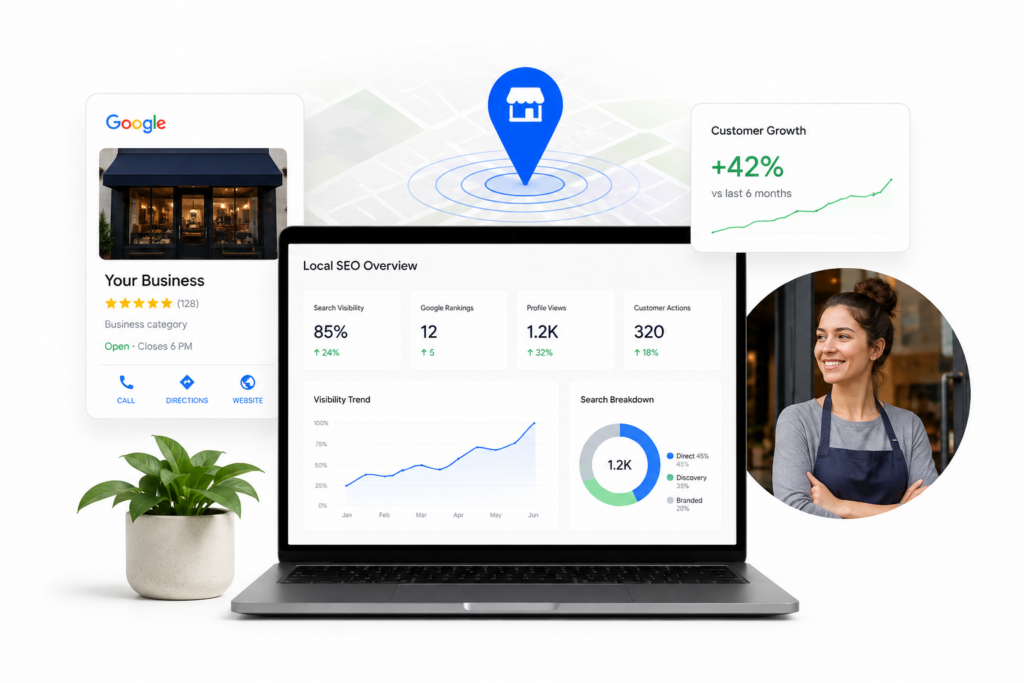
Table of Contents
- Introduction
- What Is Local SEO for Small Business?
- Why Local SEO Matters
- How Local SEO Works
- Google Business Profile Optimization
- Local Keyword Research
- On-Page Local SEO
- Local Citations and Reviews
- Local Link Building
- Common Mistakes
- Future of Local SEO
- Conclusion
- FAQs
For small businesses, visibility has become one of the most important growth factors in modern digital marketing. Customers rarely depend only on offline recommendations anymore. Today, users search online before choosing a service provider, purchasing a product, booking appointments, or visiting physical locations.
This behavior change has made local search one of the most valuable opportunities for businesses that want sustainable customer acquisition.
That is where local SEO for small business becomes essential.
Local SEO focuses on improving how businesses appear in location-based search results across search engines and map platforms. Instead of competing nationally, businesses can attract nearby customers with stronger buying intent and higher conversion potential.
Unlike traditional advertising where spending often determines reach, local SEO builds long-term visibility by strengthening trust signals, business relevance, and digital authority.
At BizBoosted, we view local SEO as one of the strongest growth channels because it combines organic visibility, business credibility, and measurable outcomes into one scalable system.
For businesses trying to compete online without increasing advertising budgets, local SEO for small business creates a more sustainable growth model. Instead of chasing broad audiences, businesses can attract nearby customers who already have purchase intent. A strong local SEO for small business strategy improves visibility, strengthens trust, and supports measurable business growth over time.
What Is Local SEO for Small Business?
Local SEO for small business is the process of optimizing a company’s digital presence to improve visibility for searches performed within a geographic area.
When users search terms like nearby services, business categories, or location-specific solutions, search engines evaluate which businesses deserve visibility.
This evaluation depends on factors including relevance, business authority, location proximity, customer engagement, website quality, and overall trust.
Local SEO includes multiple optimization activities such as:
- Google Business Profile optimization
- Website optimization
- Local keyword targeting
- Review management
- Citation building
- Local content creation
- Mobile experience improvements
The goal is not simply more traffic.
The objective is attracting people who are more likely to contact, visit, book, or purchase.
For small businesses with limited budgets, local SEO creates opportunities to compete without depending completely on paid advertising.
Why Local SEO Matters More Than Ever
Consumer behavior continues evolving quickly.
Customers expect immediate answers and personalized recommendations when searching online.
Search engines increasingly prioritize businesses that provide accurate information, positive experiences, and trustworthy signals.
Local SEO supports these expectations.
Businesses with strong local presence often gain advantages including:
- Higher search visibility
- Better customer trust
- More calls and inquiries
- Increased website visits
- Improved conversion rates
Mobile search has accelerated this trend because users frequently search while actively making decisions.
When businesses appear during these moments, customer acquisition becomes significantly easier.
Local SEO also creates long-term value because optimized assets continue generating traffic even after initial work is completed.
How Local SEO Works
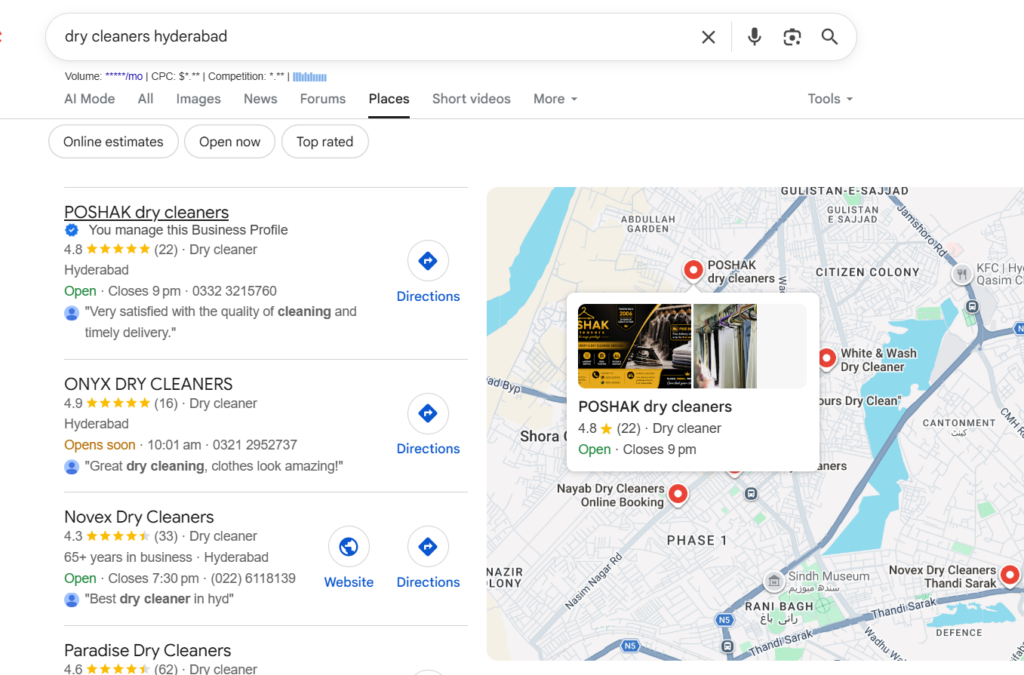
Local SEO helps search engines understand what a business offers, where it operates, and why users should choose it.
Search algorithms analyze multiple signals before displaying local results.
These signals commonly include:
- Business categories
- Website relevance
- Customer reviews
- Local authority
- User engagement
- Location consistency
Google Business Profile plays a major role because it supplies business details directly to search users.
Website optimization strengthens those signals by supporting search relevance and improving user experience.
Businesses that combine profile optimization with strong website foundations often see stronger long-term growth.
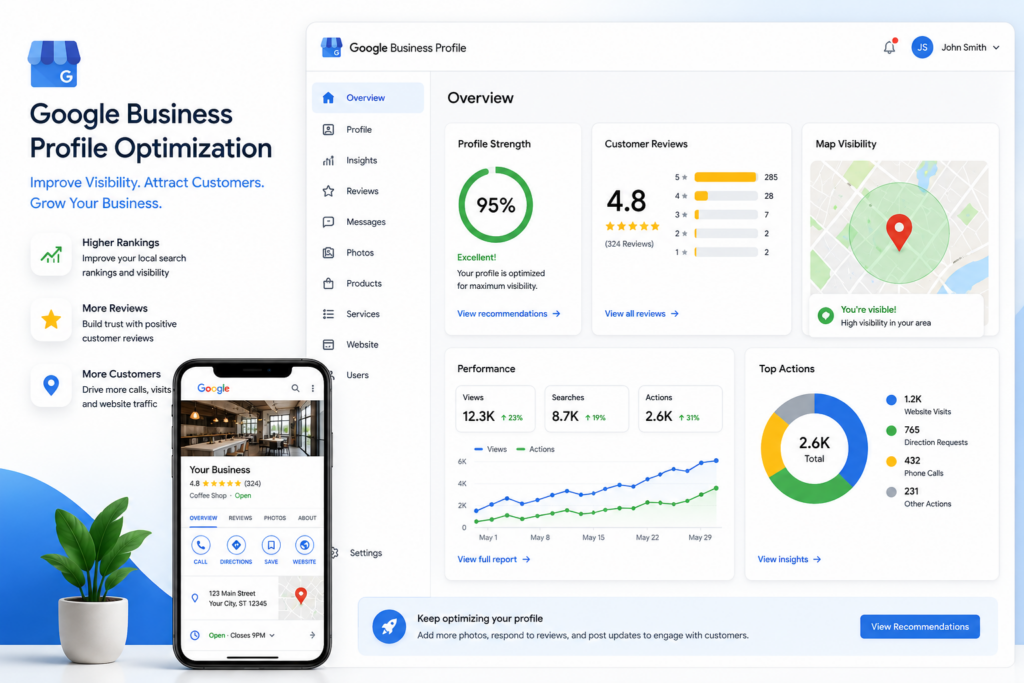
Google Business Profile Optimization
Google Business Profile remains one of the most important assets in local SEO.
Businesses should complete every available section carefully.
This includes:
- Business name
- Categories
- Contact details
- Website URL
- Services
- Hours
- Business description
Images also influence customer trust.
Profiles with updated visuals often improve engagement.
Reviews remain another critical ranking signal.
Encouraging authentic customer feedback and responding professionally improves visibility and business credibility.
Regular profile updates support stronger performance over time.
Local Keyword Research
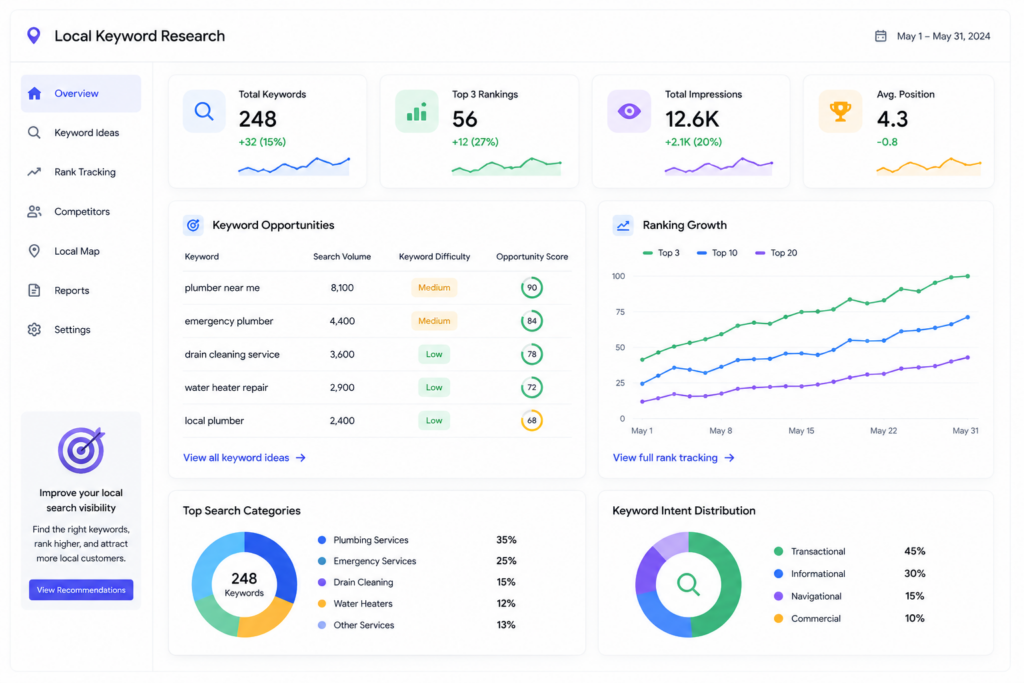
Keyword research helps businesses understand how customers search locally.
Instead of broad keywords, businesses should focus on intent-driven searches.
Examples include:
- local SEO services
- digital marketing agency near me
- SEO company for local business
- local business marketing
Businesses should also include semantic terms naturally throughout content.
Keyword placement should support readability rather than force repetition.
Strong keyword targeting increases relevance and improves search performance.
On-Page Local SEO for Better Rankings
On-page SEO strengthens the connection between your website and local search visibility.
Many businesses optimize business listings but ignore website optimization, which limits overall performance.
Every important page should include relevant titles, descriptions, headings, and naturally placed local keywords.
Businesses should also optimize:
- Page URLs
- Internal links
- Image alt text
- Mobile responsiveness
- Page speed
- Clear calls to action
Creating location-focused service pages can improve rankings for targeted areas.
Local content also supports stronger visibility. Publishing educational blog posts, FAQs, and location-specific resources increases topical authority and strengthens customer trust.
Businesses that combine local relevance with strong user experience often achieve more stable growth.
Local Citations and Customer Reviews
Citations are mentions of your business information across the internet.
These listings help search engines confirm legitimacy and improve trust.
Business information should remain consistent across every platform.
Important information includes:
- Business name
- Address
- Phone number
- Website URL
- Business category
Customer reviews create another important local signal.
Reviews influence both rankings and purchasing decisions.
Businesses should encourage customers to leave authentic reviews and respond professionally.
Positive engagement improves visibility while building stronger relationships with customers.
Review management should become part of regular business operations rather than occasional marketing activity.
Local Link Building Strategy
Backlinks continue playing an important role in local SEO.
However, quality matters significantly more than quantity.
Small businesses should prioritize links that strengthen authority and local relevance.
Examples include:
- Local business directories
- Industry organizations
- Community websites
- Local partnerships
- Educational resources
- Guest content collaborations
Businesses should avoid spammy link practices because they weaken long-term growth.
Publishing valuable content naturally creates stronger opportunities for earning relevant links.
Internal linking also supports SEO by helping users and search engines navigate important pages more effectively.
Common Local SEO Mistakes to Avoid
Many businesses invest in local SEO but fail because of avoidable mistakes.
One common issue is incomplete Google Business Profiles.
Missing categories, outdated information, and poor descriptions reduce visibility.
Another mistake is inconsistent business information across platforms.
Businesses also frequently overlook mobile optimization despite strong mobile search growth.
Weak website content creates additional challenges.
Many pages fail to explain services clearly or answer customer questions.
Keyword stuffing remains another major issue.
Businesses should prioritize useful content instead of repeating terms excessively.
Local SEO works best through consistency and customer value.
Future of Local SEO for Small Business
Local SEO continues evolving alongside AI search, mobile behavior, and customer expectations.
Businesses should prepare for stronger personalization and search experiences.
Voice search and AI-generated answers increasingly influence discovery.
Search engines now reward businesses that demonstrate experience, expertise, authority, and trust.
This means businesses should prioritize:
- Helpful content
- Accurate business information
- Strong customer experiences
- Consistent reviews
- Better website usability
The future of local SEO will belong to businesses that combine technical optimization with real customer value.
How Small Businesses Can Create a Local SEO Action Plan
One of the biggest reasons businesses struggle with local SEO is inconsistency. Many companies optimize their website once and expect long-term rankings without ongoing improvements. Local SEO works differently. Search visibility grows through continuous optimization and regular updates.
Small businesses should begin by auditing their current online presence. Review website performance, Google Business Profile, customer reviews, business listings, and existing rankings. Understanding the starting point makes future improvements easier to measure.
The next step is defining local business goals. Some businesses focus on increasing calls while others prioritize bookings, website visits, or physical store traffic. Clear goals make SEO decisions more effective.
Businesses should then create a monthly optimization schedule. Updating business profiles, publishing useful content, earning reviews, and improving service pages creates stronger long-term results.
Tracking performance is equally important. Businesses should monitor local rankings, website traffic, user engagement, and conversions to identify opportunities.
A structured local SEO action plan creates sustainable growth instead of relying on random marketing activities.
Measuring Local SEO Success
Local SEO should always connect to measurable business outcomes.
Many businesses focus only on rankings, but rankings alone do not guarantee growth. Success should be measured through actions that directly support business goals.
Website traffic remains an important indicator because it shows whether visibility is increasing.
Businesses should also monitor:
- Phone calls
- Form submissions
- Direction requests
- Website engagement
- Customer inquiries
- Conversion rate
Google Analytics and website reporting tools can help identify how users interact with content and which pages generate results.
Review growth also provides valuable insight because customer trust directly affects local performance.
Over time, businesses that consistently analyze data make stronger optimization decisions and improve overall return on investment.
Local Content Marketing for Small Businesses
Content marketing strengthens local SEO by helping businesses answer customer questions and improve topical authority.
Creating locally relevant content increases opportunities to appear in search results.
Businesses can publish:
- Service guides
- Local industry insights
- Frequently asked questions
- Educational resources
- Customer success stories
Content should focus on solving problems rather than promoting services repeatedly.
Location-focused content also helps businesses connect more effectively with nearby audiences.
Another advantage of content marketing is that one blog post can support multiple channels including SEO, social media, email campaigns, and internal linking.
At BizBoosted, we recommend building content around real customer intent instead of only targeting search volume.
Why Small Businesses Should Invest in Local SEO Now
Competition in local search continues increasing every year.
Businesses that delay optimization often lose visibility to competitors with stronger digital foundations.
Local SEO creates one of the highest long-term returns because rankings continue generating opportunities over time.
Unlike advertising where visibility stops when budgets end, local SEO creates assets that continue working.
Customers also trust businesses that appear consistently across search platforms.
For small businesses with limited budgets, investing in local SEO often creates more sustainable growth than depending entirely on paid campaigns.
Businesses that start building local authority today position themselves for stronger future performance.
Local SEO Checklist
Before publishing or launching optimization efforts, review this checklist:
✓ Google Business Profile completed
✓ Website optimized for mobile
✓ Local keywords included naturally
✓ Service pages created
✓ Reviews collected consistently
✓ Citations updated
✓ Internal links added
✓ Images optimized
✓ Content refreshed regularly
✓ Analytics installed
Following this checklist helps businesses maintain stronger local search performance over time.
Real Local SEO Results Businesses Can Expect
One of the most common questions small business owners ask is whether local SEO actually produces measurable results. The answer depends on consistency, competition, and execution quality, but businesses that invest strategically often see meaningful improvements over time.
Strong local SEO can help increase website visits, improve phone inquiries, generate more direction requests, and create stronger customer trust. Businesses may also experience better visibility across map searches and higher engagement from nearby audiences actively looking for solutions.
Results usually do not appear overnight. Local SEO works as a long-term growth channel where small improvements compound over time. Updating business profiles, publishing useful content, collecting reviews, and maintaining accurate information create stronger performance month after month.
For businesses focused on sustainable growth, local SEO becomes more than a ranking strategy. It becomes a customer acquisition system that supports visibility, trust, and measurable business outcomes.
At BizBoosted, we recommend treating local SEO as an ongoing investment rather than a one-time setup because long-term consistency often produces the strongest results.
Conclusion
Local search is no longer optional for businesses that want sustainable growth.
Building a strong local SEO for small business strategy helps organizations improve visibility, increase trust, and attract qualified customers at the exact moment they are ready to act.
Success comes from combining business profile optimization, local content, reviews, website improvements, and consistent authority building.
Rather than depending only on advertising, businesses can create long-term growth systems that continue generating opportunities over time.
At BizBoosted, we believe local SEO works best when businesses focus on delivering value while strengthening search visibility through strategic optimization.
Successful businesses understand that local SEO for small business is not a one-time activity. Rankings improve through continuous optimization, accurate business information, stronger content, and customer engagement. When implemented consistently, local SEO for small business helps companies increase visibility, generate qualified leads, and create long-term growth opportunities.
FAQs
What is local SEO for small business?
Local SEO helps businesses appear in location-based search results and attract nearby customers.
How long does local SEO take?
Most businesses begin seeing meaningful improvements within several months.
Does Google Business Profile improve rankings?
Yes. Optimized profiles support visibility, engagement, and trust.
Are customer reviews important?
Reviews influence both rankings and purchasing decisions.
Is local SEO better than paid ads?
Local SEO supports long-term visibility while paid ads provide faster exposure.