By BizBoosted Team · Updated June 2026 · 11 min read
Most small business owners do not fail at marketing because they lack creativity. They fail because they skip the fundamentals and jump straight into tactics running ads, posting on social media, or trying the latest trend without understanding the principles that make any of it actually work. Marketing fundamentals are not an outdated academic concept. They are the reason some campaigns generate consistent revenue while others burn through budget with nothing to show for it.
This guide breaks down marketing fundamentals in plain language, with real 2026 examples relevant to USA-based small businesses, so you can build a strategy that holds up regardless of which platform or trend comes next.
What marketing fundamentals actually mean
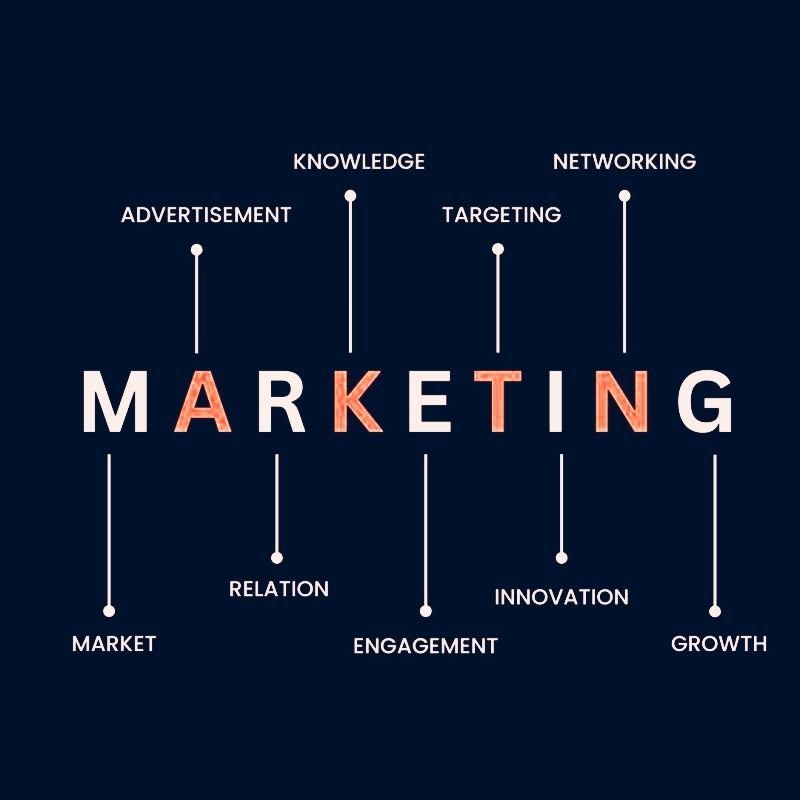
At its simplest, marketing fundamentals are the core principles that explain how a business connects what it sells to the people who need it. They cover what you offer, what you charge, where customers find you, and how you communicate value. These ideas existed long before social media or search engines, and they remain just as relevant now because human buying behavior has not changed nearly as fast as the platforms we use to reach people.
What is a common question among beginners: marketing fundamentals are different from marketing tactics. A tactic is a specific action, like running a Facebook ad or sending a discount email. A fundamental is the underlying reasoning that tells you whether that tactic makes sense for your business in the first place. Skip the fundamentals, and you end up copying tactics that worked for someone else’s business but not yours.
Why fundamentals matter more than trends
New marketing trends appear constantly a new social platform, a new AI tool, a new content format. Businesses that only chase trends without a fundamental strategy underneath tend to see short bursts of attention followed by long stretches of nothing. Businesses that understand the fundamentals can evaluate any new trend quickly: does this help me reach my audience, communicate my value, or build trust faster? If the answer is no, the trend is not worth the time investment.
The core framework behind every marketing fundamentals approach
Product: what you are actually offering
Every marketing fundamentals discussion starts with the product or service itself, because no amount of clever promotion fixes a product that does not solve a real problem. Before writing a single ad or blog post, a business needs absolute clarity on what specific problem it solves and for whom. A landscaping company in Texas and a software company in California both need this clarity, even though their products look nothing alike.
Small businesses often skip this step because they assume their product’s value is obvious. It rarely is, especially to a stranger encountering the brand for the first time. Writing out the exact problem your product solves, in the words your customer would use, is one of the most underrated marketing exercises available.
Price: what you charge and what it signals
Price is never just a number. It is also a signal about quality, exclusivity, and positioning. A price set too low can make customers question quality, while a price set too high without justification drives potential buyers toward competitors. Marketing fundamentals teach that pricing decisions should be made by studying competitors, understanding what your target customer is willing to pay, and pricing in a way that reflects the actual value delivered.
For small businesses specifically, this often means resisting the urge to compete purely on low price. Competing on value, service quality, or specialization is usually more sustainable for a business that cannot out-discount larger competitors.
Place: where customers find and buy from you
Place refers to every channel where a customer can discover, evaluate, and purchase from your business — your website, your physical location, the marketplaces you sell on, and the search engines that bring people to you. In 2026, place increasingly means digital visibility just as much as physical location. A small business that is easy to find on Google but hard to reach by phone may actually be losing fewer customers than one with a great location but no online presence.
Promotion: how you communicate value
Promotion is the part of marketing fundamentals most people think of first advertising, content, email, and social media. But promotion only works when it is built on the first three Ps. A brilliant ad campaign promoting an unclear product or an unjustified price will still underperform. This is precisely why so many small businesses feel like their marketing “is not working,” when the real issue is a missing foundation underneath the promotion.
The extended fundamentals for service-based and digital businesses
People: the human element customers actually remember
For service-based businesses especially, the people delivering the service often matter more than the service description itself. Customers remember how a business made them feel, not just what was technically delivered. Training staff, building a recognizable team presence, and showing the humans behind the brand are all part of this fundamental, and they are frequently the difference between a one-time customer and a repeat one.
Process: the experience behind the purchase
Process covers everything a customer experiences while buying from you, from the first website visit to the final delivery. A confusing checkout process, a slow response to inquiries, or an unclear onboarding flow can undo the work of an otherwise strong marketing campaign. Marketing fundamentals treat process as part of marketing itself, not a separate operations concern, because a frustrating process actively damages word-of-mouth and reviews.
Physical evidence: the proof that builds trust
Physical evidence includes everything tangible that proves your business delivers what it promises reviews, testimonials, case studies, certifications, and even the visual design of your website. In a market where customers cannot physically inspect a product before buying online, physical evidence often becomes the deciding factor between two similar options.
Latest update: how marketing fundamentals are applied in 2026
AI has changed execution speed, not the underlying principles
The biggest shift in 2026 is not a new fundamental it is the speed at which fundamentals can be executed. AI tools now help businesses research audiences, draft content, and personalize messaging far faster than even two years ago. However, the fundamentals being executed have not changed. A business still needs a clear product, fair pricing, accessible distribution, and honest promotion. AI simply removes friction from doing each of these well.
Trust signals matter more than ever
As AI-generated content floods the internet, audiences have become noticeably more skeptical of generic, impersonal marketing. This has made physical evidence and authentic human storytelling more valuable, not less. Businesses that lean into real case studies, named team members, and specific results are outperforming those relying on generic, AI-sounding copy.
Why marketing fundamentals are trending again among small business owners
There has been a noticeable return to fundamentals-focused content across marketing blogs and communities in 2026, largely as a reaction to years of chasing isolated tactics and viral hacks. Small business owners who tried trend after trend without sustainable results are now searching specifically for foundational frameworks they can rely on long term, regardless of which platform’s algorithm changes next.
This shift also reflects a broader fatigue with marketing advice that feels disconnected from actual business results. Fundamentals-based content tends to attract a more serious, higher-intent audience business owners looking to build something durable rather than chase a quick spike in traffic.
How to apply marketing fundamentals to your business this month
Audit your current marketing against the fundamentals
Before creating new content or campaigns, review your current marketing against each fundamental. Is your product description crystal clear? Is your pricing justified and visible? Are you easy to find and contact? Is your promotion consistent with the value you actually deliver? Most marketing problems trace back to a gap in one of these areas rather than a lack of creativity.
Build one fundamental at a time
Trying to fix every fundamental simultaneously is overwhelming and rarely effective. Choose the weakest area first. A business with a confusing process might focus there before investing more in promotion. A business with unclear positioning should clarify product and pricing before scaling ad spend.
- List the exact problem your product solves, in your customer’s own words
- Review your pricing against three direct competitors this week
- Identify one friction point in your current customer process and fix it
- Collect and publish at least three real customer testimonials this month
Conclusion
Marketing fundamentals are not a beginner topic to move past quickly they are the foundation every advanced strategy still depends on, including the AI-powered, fast-moving tactics popular in 2026. Businesses that revisit these basics regularly tend to build marketing that holds up over time, rather than marketing that only works while a trend is hot. Start with one fundamental, apply it honestly to your business this week, and build outward from there.
The businesses that consistently outperform their competitors are rarely the ones with the biggest budgets they are the ones who never stopped checking their fundamentals, even after finding short-term success. A strong product or clever campaign can win attention once, but only a solid foundation across all the Ps turns that attention into repeat customers and long-term revenue. As platforms, algorithms, and tools continue to evolve through 2026 and beyond, the businesses still standing will be the ones whose marketing was never dependent on any single trend in the first place. This is precisely why experienced marketers keep returning to these principles year after year, regardless of how advanced the available technology becomes. Mastering the fundamentals today is what makes every future strategy, tool, and platform shift easier to navigate rather than disruptive.
If you want help applying these fundamentals to a working strategy for your own business, the BizBoosted team works directly with USA-based small businesses to turn these principles into a practical marketing plan.
FAQ
Q: What are the basic marketing fundamentals every business should know?
A: The core marketing fundamentals are product, price, place, and promotion, often called the 4 Ps. Service-based and digital businesses typically extend this to 7 Ps by adding people, process, and physical evidence, which account for the experience and trust customers need before buying.
Q: Why do marketing fundamentals matter more than following trends?
A: Trends change quickly and rarely produce lasting results on their own. Fundamentals provide a framework to evaluate whether any new trend or tactic is actually worth pursuing for your specific business, which prevents wasted time and budget chasing tactics that do not fit.
Q: How do marketing fundamentals apply to small businesses specifically?
A: Small businesses benefit from fundamentals by focusing limited resources where they matter most. Understanding pricing strategy, clear positioning, and trust-building evidence often produces better results than spreading a small budget across many trendy tactics at once.
Q: What is the difference between marketing fundamentals and marketing strategy?
A: Fundamentals are the underlying principles, such as understanding your product’s value or your pricing position. Strategy is the specific plan built on top of those fundamentals, including which channels to use and what content to create.
Q: How has AI changed the way marketing fundamentals are applied in 2026?
A: AI has not changed the fundamentals themselves, but it has significantly sped up execution. Businesses can now research audiences, draft content, and personalize messaging faster, while the underlying need for a clear product, fair pricing, and honest promotion remains unchanged.
Q: Why are physical evidence and trust signals so important right now?
A: As more generic AI-generated content appears online, audiences have grown more skeptical of impersonal marketing. Real testimonials, named team members, and documented results help businesses stand out and build credibility faster than generic copy alone.
Q: How long does it take to see results from focusing on marketing fundamentals?
A: Most businesses notice clearer messaging and better customer response within a few weeks of auditing their fundamentals, though full strategic results from consistent application typically build over two to three months.
Q: Where can a small business get help applying marketing fundamentals?
A: Agencies like BizBoosted work directly with small businesses in the USA to turn fundamental marketing principles into a practical, actionable strategy tailored to their specific industry and budget.